Historically Grounded Christian Apologetics

Author: David Sherry

  • TITLE: 04. Dating the Gospels: Late First Century

    TITLE: 04. Dating the Gospels: Late First Century

    Verse: Matthew 24:1-2 NASB 1995

    Summary/ TL;DR

    Jesus predicts the destruction of the second temple, found in the synoptic gospels, which occurred in 70 AD. From a naturalistic perspective, this would have meant that the writers had prior knowledge of this event. Then using external sources, such as circulation of the gospels and early church writings, we can date the final gospel of John to the end of the first century. This has led to the modern general consensus of a dating window to 65-95 AD.

    Introduction

    The New Testament didn’t include a date of when the books and letters were composed, so we’ve been left to either trust they’re early, or investigate further. There is a modern dating window, which we’ll focus on in this discussion, and a traditional dating window, dating earlier. Regardless of which dating consensus is used, it’s worth noting that, by historical standards, documentation written this close to the events is exceptionally valuable. Therefore, using internal and external evidence paired with historical benchmarks, we can begin to unravel this mystery. So what can we use to determine when the Gospels were written?

    1. manuscript fragments, < 150
    2. external attestation, 100 – 130 AD
    3. internal evidence, ~70 AD

    Body

    Manuscript Fragments, 100 – 150 AD

    Manuscripts are ancient handwritten documents that were written on ancient “paper”, such as papyrus. Papyrus derived from the papyrus plant, which in return, would degrade in quality over time. Our oldest known manuscripts discovered closest to the time of Jesus are found in fragmentary form, which are just partial pieces of the manuscript. Through the study of palaeography, which is the study and analysis of ancient writings, we can actually give an approximation when these documents were written. Here are a few of the earliest manuscripts discovered:

    1. Papyrus 52,
      • Dating: 125 (100-150) AD
      • Discovered: Egypt
      • Content: Gospel of John, 18:31-33, 37-38
    2. Papyrus 90,
      • Dating: 150 (100-200) AD
      • Discovered: Egypt
      • Content: Gospel of John, 18:36-19:7
    3. Papyrus 104
      • Dating: 150 (100-200) AD
      • Discovered: Egypt
      • Content: Gospel of Matthew, 21:34-37

    Using these examples, this informs us that the Gospels of Matthew and John were already written and circulating into Egypt by the second century. Therefore, if John was circulating into Egypt by ~125 AD, we can assume John was written years before, potentially into the first century off this evidence alone.

    Early Church Writings, 96 – 130 AD

    Narrowing the later-window-limit to an earlier date, we can refer to the early church. The early church fathers, when writing their books/ letters, would frequently spread teachings passed down onto them, or quoted directly from scripture. In fact, Origen, writing in the third century, quoted from John so extensively that we can almost rebuild a complete copy of his Gospel. However, during this topic, Origen is too late, so we’ll use earlier sources, being:

    Papias of Hierapolis, (60 AD? – 130AD)

    Written around 110-130 AD

    • “…Mark, having become the interpreter of Peter, wrote down accurately, though not in order… So then Matthew wrote the oracles/ sayings (logia) in the Hebrew language, and every one interpreted them as he was able…”
      • Preserved by Eusebius, in Ecclesiastical History, Book 3, Ch.39

    Ignatius of Antioch, (35? – 110 AD)

    Wrote his letters between (107-110 AD)?

    • “Every kind of wound is not healed with the same plaster. Mitigate violent attacks [of disease] by gentle applications. Be in all things “wise as a serpent, and harmless as a dove.“”
      • Letter to Polycarp, Chapter 2 
        • Behold, I send you forth as sheep in the midst of wolves: be ye therefore wise as serpents, and harmless as doves.”
          • Matthew 10:16 (KJV)
    • “… yet the Spirit, as being from God, is not deceived. For it knows both whence it comes and whither it goes
      • Letter to the Philadelphians, Chapter 7
        • The wind bloweth where it listeth, and thou hearest the sound thereof, but canst not tell whence it cometh, and whither it goeth: so is every one that is born of the Spirit.
          • John 3:8 (KJV)

    Clement of Rome, (35? – 99 AD martyred)

    Wrote 1 Clement around (95-97 AD)?

    • “For thus He spoke: “Be merciful, that you may obtain mercy; forgive, that it may be forgiven to you; as you do, so shall it be done to you; as you judge, so shall you be judged; as you are kind, so shall kindness be shown to you; with what measure you measure, with the same it shall be measured to you.”
      • 1 Clement, Chapter 13
        • Blessed are the merciful, for they will receive mercy.
          • Matthew 5:7 
        • “For if you forgive other people for their offenses, your heavenly Father will also forgive you.”
          • Matthew 6:14 
        • Do not judge, so that you will not be judged. 2 For in the way you judge, you will be judged; and by your standard of measure, it will be measured to you.
          • Matthew 7:1 
    • “Remember the words of our Lord Jesus Christ, how He said, “Woe to that man [by whom offences come]! It were better for him that he had never been born, than that he should cast a stumbling-block before one of my elect. Yea, it were better for him that a millstone should be hung about [his neck], and he should be sunk in the depths of the sea, than that he should cast a stumbling-block before one of my little ones.””
      • 1 Clement, Chapter 46
        • “The Son of Man is going away just as it is written about Him; but woe to that man by whom the Son of Man is betrayed! It would have been good for that man if he had not been born.
          • Matthew 26:24 
        • “… but whoever causes one of these little ones who believe in Me to sin, it is better for him that a heavy millstone be hung around his neck, and that he be drowned in the depths of the sea. 7 “Woe to the world because of its stumbling blocks! For it is inevitable that stumbling blocks come; but woe to the person through whom the stumbling block comes!
          • Matthew 18:6-7

    Bonus:

    The Didache, or “The Lord’s Teaching Through the Twelve Apostles to the Nations”

    (50 – 120 AD)

    The Didache is claimed to be the Apostles teaching, and simply stated, is a church manual. Contained within the text extensively quotes from the Gospel of Matthew, particularly from the Sermon on the Mount. The dating is a little complex, ranging from an early mid-century document, to early second century. Some believe it was written in “layers”, each layer dating to different decades of the century, with the “earlier” layers containing Matthew. Whichever method used to date the Didache, if it was quoting Matthew, it’s another important document showcasing the early dating transmission of the written Gospels.

    Below is the Lord’s Prayer, quoted almost word for word, depending on the translation used:

    Our Father who art in heaven, hallowed be Thy name. 

    Thy kingdom come. Thy will be done on earth, as it is in heaven. 

    Give us today our daily (needful) bread, 

    and forgive us our debt as we also forgive our debtors. 

    And bring us not into temptation, but deliver us from the evil one (or, evil); 

    for Thine is the power and the glory for ever..

    • Didache 8:1

    “Pray, then, in this way: ‘

    Our Father, who is in heaven, Hallowed be Your name.

    10 Your kingdom come. Your will be done, On earth as it is in heaven.

    11 Give us this day our daily bread.

    12 And forgive us our debts, as we also have forgiven our debtors.

    13 And do not lead us into temptation, but deliver us from evil.’

    • Matthew 6:9-13 NASB

    Destruction of the Second Temple, 70 AD

    Within the text themselves, there is one key event used to date the Gospels. The destruction of the second temple, which is found in Matthew, Mark and Luke, the synoptic gospels. This is a significant event, as it was one of the most devastating losses the Jews faced against their opposition to Rome. Predating this tragedy was “The First Jewish-Roman War” (66–70/73 CE) which was a revolt between the Jews and the Roman empire. This was a result due to the Jews being subjected to Roman governance, which led to escalating conflicts between both forces. In 70 AD, Titus, son of Emperor Vespasian, led the siege of Jerusalem, where the second temple would succumb to ashes. 

    Below are the biblical mentions of Jesus prophesying about the impending state of the second temple:

    SYNOPTIC GOSPELS

    Matthew 24: 1-2

    Signs of Christ’s Return

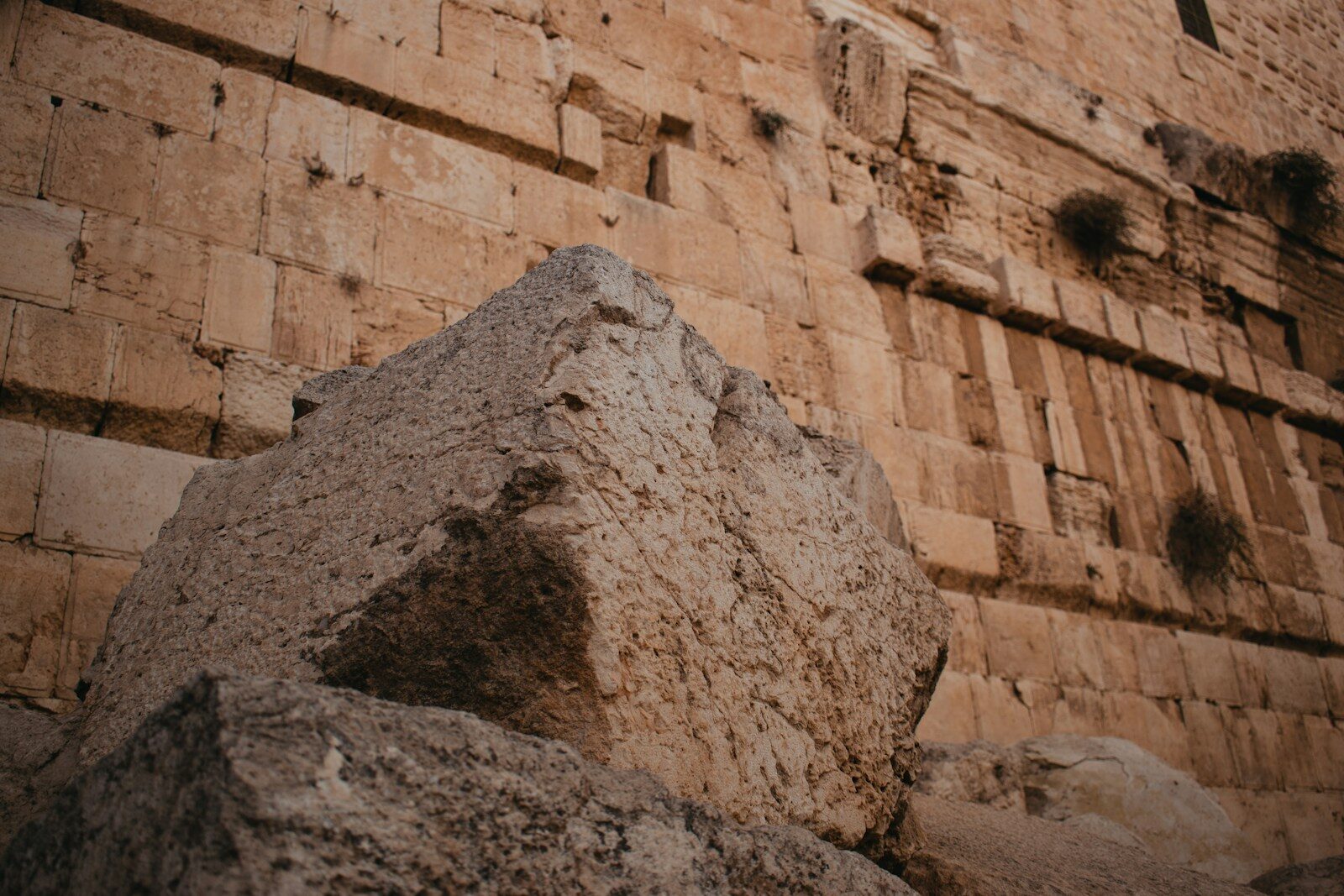
    “Jesus left the temple area and was going on His way when His disciples came up to point out the temple buildings to Him. 2 But He responded and said to them, “Do you not see all these things? Truly I say to you, not one stone here will be left upon another, which will not be torn down.””

    Mark 13: 1-2

    Things to Come

    “As He was going out of the temple, one of His disciples said to Him, “Teacher, look! What wonderful stones and what wonderful buildings!” 2 And Jesus said to him, “Do you see these great buildings? Not one stone will be left upon another, which will not be torn down.””

    Luke 21: 5-6

    The Widow’s Gift

    “… 5 And while some were talking about the temple, that it was decorated with beautiful stones and vowed gifts, He said, 6 “As for these things which you are observing, the days will come when there will not be left one stone upon another, which will not be torn down.”” 

    Things to Come

    “… 20 But when you see Jerusalem surrounded by armies, then recognize that her desolation is near. 21 Then those who are in Judea must flee to the mountains, and those who are inside the city must leave, and those who are in the country must not enter the city; 22 because these are days of punishment, so that all things which have been written will be fulfilled. 23 Woe to those women who are pregnant, and to those who are nursing babies in those days; for there will be great distress upon the land, and wrath to this people; 24 and they will fall by the edge of the sword, and will be led captive into all the nations; and Jerusalem will be trampled underfoot by the Gentiles until the times of the Gentiles are fulfilled.

    Notice in all instances, the destruction of the temple hasn’t actually occurred yet. Jesus is foretelling an event, so from the author’s point of view, they’re describing an event that hasn’t happened. This detail doesn’t necessarily prove that the books were written prior to the destruction, but a literary observation. So how do we know when the temple was destroyed, as mentioned in the gospels? In ancient Judea, lived a Jewish historian named Flavius Josephus who wrote an account of it, dating to the late first century. Josephus was born in the early first century, and served as a Jewish commander during the The First Jewish Revolt, but surrendered to the Romans and eventually became a Roman citizen. Here Josephus records the event in his book, The Jewish Wars:

    TITLE: The Jewish Wars, ~75 AD

    AUTHOR: Flavius Josephus (37 – 100 AD)

    Book 6, Chapter 4, Paragraph 5

    “5. So Titus retired into the tower of Antonia; and resolved to storm the temple, the next day, early in the morning, with his whole army: and to encamp round about the holy house. But as for that house, God had, for certain, long ago doomed it to the fire. And now that fatal day was come, according to the revolution of ages: it was the tenth day of the month Lous [Ab, A.D. 70]8: upon which it was formerly burnt by the King of Babylon. Although these flames took their rise from the Jews themselves, and were occasioned by them. For upon Titus’s retiring, the seditious lay still for a little while, and then attacked the Romans again; when those that guarded the holy house fought with those that quenched the fire that was burning the inner [court of the] temple. But these Romans put the Jews to flight; and proceeded as far as the holy house it self. At which time one of the soldiers, without staying for any orders, and without any concern or dread upon him at so great an undertaking; and being hurried on by a certain divine fury, snatched somewhat out of the materials that were on fire: and being lifted up by another soldier, he set fire to a golden window, through which there was a passage to the rooms that were round about the holy house, on the north side of it. As the flames went upward, the Jews made a great clamour, such as so mighty an affliction required; and ran together to prevent it. And now they spared not their lives any longer, nor suffered any thing to restrain their force, since that holy house was perishing, for whose sake it was that they kept such a guard about it.”

    Conclusion

    This evidence, plus additional evidence and criteria not mentioned, has contributed to most modern day critical scholars dating the Gospels. For instance, the Gospel of Mark to 65-70 AD, Matthew and Luke to 70-85 AD, and John to 90-95 AD. A simplified explanation being, along with other factors, that Mark’s writing has an underdeveloped “Christology” and a persecuted tone. Matthew and Luke follow, both relying on Mark as a source. Finally John is independent to the synoptics, and is believed to be written by the tail end of the first century due to its high Christology. This is the mainstream consensus, whereas the “traditional” or early consensus was earlier, nearing the middle of the century. The next post will explore the earlier dating, and what evidence supports it.

    Sources:

  • Title: 03. What is the Bible?

    Title: 03. What is the Bible?

    Verse: 2 Timothy 3:16-17 NASB

    “16 All Scripture is inspired by God and beneficial for teaching, for rebuke, for correction, for training in righteousness; 17 so that the man or woman of God may be fully capable, equipped for every good work.

    Summary/ TL;DR

    An ancient collection of books, divided into the Old and New Testament, beginning with the creation of mankind and finalizing with its judgement. Christians use the unity of the Old and New for scripture.

    Introduction

    What is the Bible? A commonly asked question, with varying answers due to differing perspectives. The “Historian” may use the Bible as a document to trace back historical events in a quest to dig into the past. The “Adventurer” may view the Bible filled with wonderful tales and thrills. The “Faithful” may use it as a resource to strengthen their relationship with God or to discover purpose. Others may view it through a more negative lens, as a collection of books of tribulations, darkness, and suffering. Regardless of how you view the Bible, it is the most influential book in human history.

    Body

    So what is the Bible? The name derives from the Greek term “biblia”, meaning books, or library. Therefore it is a collection of 66 books (Protestant Bible), written in 3 primary languages: Greek, Hebrew, and Aramaic, attributed to approximately 40 authors over a span of 1500 years. The Bible begins with Genesis, the beginning of creation and mankind, and ends with Revelation, the final judgement of mankind. The Bible is split into 2 divisions, the Old and New Testament, in other words, an old and new covenant (agreement) between God and his people. Judaism uses the Old Testament (the Tanakh) for their scripture, whereas Christians, who are under the New Covenant, use the unity between Old/ New Testaments as scripture.

    As previously mentioned in my Introduction post, our focus is on the New Testament. Jesus is the central figure of the Bible, being prophesied in the Old, and living out his ministry and church in the New. 

    The New Testament can be divided into itself, into 5 separate divisions:

    1. The Gospels (good news)
      1. Synoptics (general view, shares similar structure, events, wording)
        • Matthew
        • Mark
        • Luke
      2. Independent Account
        • John
    2. History
      1. Acts(of the Apostles)
        • Establishment of the Church, the acts of the Apostles
        • Attributed to Luke
    3. Pauline Epistles (letters to communities by Paul)
      1. Romans, 1 & 2 Corinthians, Galatians, Ephesians, Philippians, Colossians, 1 & 2 Thessalonians, 1 & 2 Timothy, Titus, and Philemon
        • Letters to targeted communities/ persons filled with teachings and theology
        • Attributed to Paul
    4. General Epistles (letters to communities)
      1. Hebrews, James, 1 & 2 Peter, 1, 2, & 3 John, and Jude
        • Letters to targeted communities/ persons filled with teachings and theology
        • Authors are connected to each epistle titles, Hebrews author remains unknown
    5. Prophecy
      1. Revelation
        • Judgement day, a salvation of mankind
        • Attributed to John the Apostle

    Throughout the blog, as it stands at the moment, most of the blog posts I’ll be writing about will be primarily focusing on The Gospels, followed by Acts. As mentioned in my 5 division breakdown, the Gospels and Acts remain rooted in history, as the remaining divisions primarily focus on teachings, theology, and events to come.

    Conclusion

    This post remains to be a brief overview, offering a general summary of what the Bible is, but future posts will hone in on specifics. That includes dating the Bible, who the authors were, historic locations and events, reliability, etc. For this blog’s identity, we’re the earlier mentioned “Historian”, and we seek to bring the past back to life. Let’s unravel the truth.

    Sources:

    https://www.gotquestions.org/what-is-the-Bible.html

    https://www.reviveourhearts.com/blog/how-is-the-new-testament-organized/?srsltid=AfmBOorlgZCDDLcz3On3i6-SXtkl-5sz7BnCxK9Hma5FwMHO4mSc0CN0

  • Title: 02. Evidential Criteria for Testing Reliability

    Title: 02. Evidential Criteria for Testing Reliability

    Verse: Deuteronomy 19:15 NASB

    15 “A single witness shall not rise up against a person regarding any wrongdoing or any sin that he commits; on the testimony of two or three witnesses a matter shall be confirmed.”

    Summary/ TL;DR

    Biblical reliability can be substantiated with Historical Evidences such as:

    1. Material (physical)
    2. Documentary (written)
    3. Behavioural (human response)

    while using a vast amount of criteria methods such as:

    1. Multiply Attested
    2. Early Dating
    3. Authenticity

    to determine if the evidence is true and reliable.

    Introduction

    To begin laying out our foundation, it’s important to list the evidence and criteria that will be used to determine Biblical and historical reliability. I concluded that the Bible and supporting historical documents had to be dated early, come from authentic sources, fit within a verifiable practice or tradition, and have multiple attestations. The objective was to minimize any subjectivity, eliminate room for fabrication, and be backed by supporting evidence. As an exception to my subjectivity statement, I theorized that when the opposition agreed to any claims, this strengthened its credibility. Therefore, as Deuteronomy 19:15 states, let’s search for additional witnesses into our investigation.

    Body

    In this case, the New Testament is front and center on the investigation panel. I looked at the Bible as having its own bias, with events created to fit a narrative told by the disciples. Therefore, my first sequence of events was to place distrust in the Gospels, and sought for outside supporting evidence. These additional witnesses then had to fit into my select criteria for authority. I was able to categorize my supporting corroboration into 3 main Historical Evidence categories, which are: 

    Historical Evidences

    1. Material Evidence (archaeology, artifacts), examples include:
      1. Ossuaries (containers to store skeletal remains, a bone box)
      2. Structures, ruins
      3. Coins, jewellery 
      4. Inscriptions 
    2. Documentary Evidence (written sources), examples include:
      1. Oral Traditions
        • What did a society share orally, what did they believe and pass down?
      2. Christian Sources (Bible, Early Church Fathers)
      3. Hostile Sources (Josephus, Tacitus, etc.)
    3. Behavioural Evidence (human response), examples include:
      1. Persecution
      2. Early Belief System (Corinthian Creed)
      3. Rapid Growth of the Church/ Conversion
      4. Change in Behaviour (adoption, widow assistance, etc)

    With the evidence presented, the next step was to sift through and determine if this historical evidence was even reliable. With a wide variety of criteria methods, these were the list of  criterion I used for affirmation, broken into Universal and Exclusive Criteria categories:

    Universal Criteria:

    1. Early Dating
      • Radiocarbon dating, historical context connection, palaeography (study of ancient writings)
    2. Authenticity
      • Written by the authorship claim, not a forgery
    3. Motive
      • What was there to gain, if for instance, those who would be persecuted would be less likely to suffer for a lie
    4. Contextual Consistency 
      • Does the action or occurrence fit within the context standards? ie:
        • Did Romans really crucify criminals?
        • Did Jews really bury their dead in tombs?

    Exclusive Criteria: 

    Material Evidence

    1. Location
      • Where was this discovery made?
    2. Functionality
      • What is the object/ discovery’s purpose?
    3. Physical Properties
      • What’s it made of, its appearance?

    Documentary Evidence

    1. Early Chain of Transmission
      • When information is passed between persons where accuracy and validity may degrade over links. Ideally, as closely connected to the events as possible, below is a simple chart to demonstrate:
    GenerationLinkExample
    Jesus & Apostles1Peter, John, Matthew, Paul
    Apostolic Generation(Closely associated with Apostles)2Mark, Luke, Timothy
    Apostolic Fathers(Successors to the Apostles) 3Polycarp, Clement, Ignatius
    Early Church Father(Successors to the Apostolic Fathers)4+Irenaeus, Justin Martyr
    1. Criteria of Authenticity
      1. Criterion of Embarrassment 
        • “is a critical analysis of historical accounts in which accounts embarrassing to the author are presumed to be true because the author would have no reason to invent an embarrassing account about himself.” – Wikipedia
        • Examples:
          1. Jesus baptized by John the Baptist
            1.  implies John as superior and Jesus committed sins
          2. The disciples constant confusion and doubt
            1. Paints the disciples in a negative light
          3. Women discovered the empty tomb
            1. Women at the time, in Jewish culture, were not seen as credible witnesses
      2. Criterion of Multiple Attestation
        • If a saying or event appears in multiple, independent sources, it is more likely to be historical and authentic. Pair this with other biases and criterion and the credibility increases.
    2. Bias

    Behavioural Evidence

    1. Behavioural Change
      • Was there a moral value shift, ie. care for the poor, character development swing
    2. Commitment Cost
      • Did the persecuted abandon new beliefs, or suffer the charges?
    3. Belief Response
      • Spread of the church, actions taken, conversions

    Conclusion

    As previously mentioned, I first looked at the Bible as untrustworthy, and needed supporting evidence for validity. With our historical evidence and criteria methods listed, this was how I was able to determine what is true and reliable. To keep this balanced, these standards were applied not only to supporting corroboration, but to the New Testament as well. I continue to use these methods when questioning the scripture, as I’m aiming for a fair trial and investigation. To summarize, this is the foundation I continue to use to determine reliability, and to build my faith upon. 

  • Title: 01. Introduction to two foundations

    Title: 01. Introduction to two foundations

    Verse: Matthew 7:24-27 NASB

    The Two Foundations

    Summary/ TL;DR: A historical Christian apologetics blog for Christians with doubt, skeptics, and atheists with an interest in biblical history, by a former atheist who came to faith researching the reliability of the New Testament.

    Introduction

    The parable of “The Two Foundations” found in Matthew 7:24-27, speaks of those who built their houses on rock and sand. When these houses were tested through flooding and storms, the house built on a foundation of rock remained. This blog serves to deliver a foundation built on rock to build your faith upon through stress testing, and when opposition arises, can withstand the pressures using historical and evidential sources. The Christian faith is rooted in history, and is not to be discarded as a blind belief.

    Body

    Christianity is built on historical events, locations and figures, but it seems any and all details of the Bible are questioned for their validity. This blog serves to answer these objections against biblical and historical reliability, by primarily using archaeology, ancient practices and written records from hostile and non-hostile sources. For instance, the crucifixion of Jesus of Nazareth by Pontius Pilate can be supported through ancient historians sources such as Tacitus and Josephus. This is an event that is built on rock, not of sand, that is widely accepted as a true historical event. This is not to say the resulting event, the resurrection, can be proven without a shred of doubt, the point is resistance to arising doubt.

    I want to stress that the brightest minds can come to conflicting results on Christianity. For instance, the late Bruce Metzger, and his student Bart Ehrman, both specializing in biblical textual criticism, ultimately arrived at different conclusions, with the former remaining a believer. As an ex-atheist myself, who came to faith well into adulthood, my personal journey and historical research convinced me that Christianity is true. That isn’t to say that my sceptical nature doesn’t still exist, as I’ve been designed to question and search for answers, but my scepticism has developed into a passion for seeking truth. My point is that Christianity, although being rich in history and evidence, still requires an abundance of faith.

    So why choose this blog? I’m no theologian, no degree in history, but a blue-collar convert who persistently asks questions, and ruthlessly searches for answers. This attitude has granted me a considerable amount of time researching the historical and reliability of the New Testament. The result has led me to reading and listening to both sides of the aisle, as I have sat on both, and peered through the lens of faith and doubt. Because of my conversion and worldview, I steer to where the evidence points, regardless of the aisle. I’m seeking answers honestly, and hope that will be reflected, as I’ll cover my “doubting Thomas” perspective throughout. As Christianity is a religion that welcomes investigation, I invite you into how I conducted my research.

    Conclusion

    Therefore let’s rip up these foundations built on sand, and seek answers left before us. Too often apologetics uses theology for their defense, but for atheists or skeptics alike, theology doesn’t apply when you don’t have an established belief in God in the first place. This blog serves to validate the Bible, focusing on the New Testament, to indicate that these weren’t just myths and legends that developed over time, but events that did occur. With that said, even with the evidence that will be provided, it will still require a leap of faith. The goal is to construct a solid footing before that leap, let’s begin laying out the groundwork.