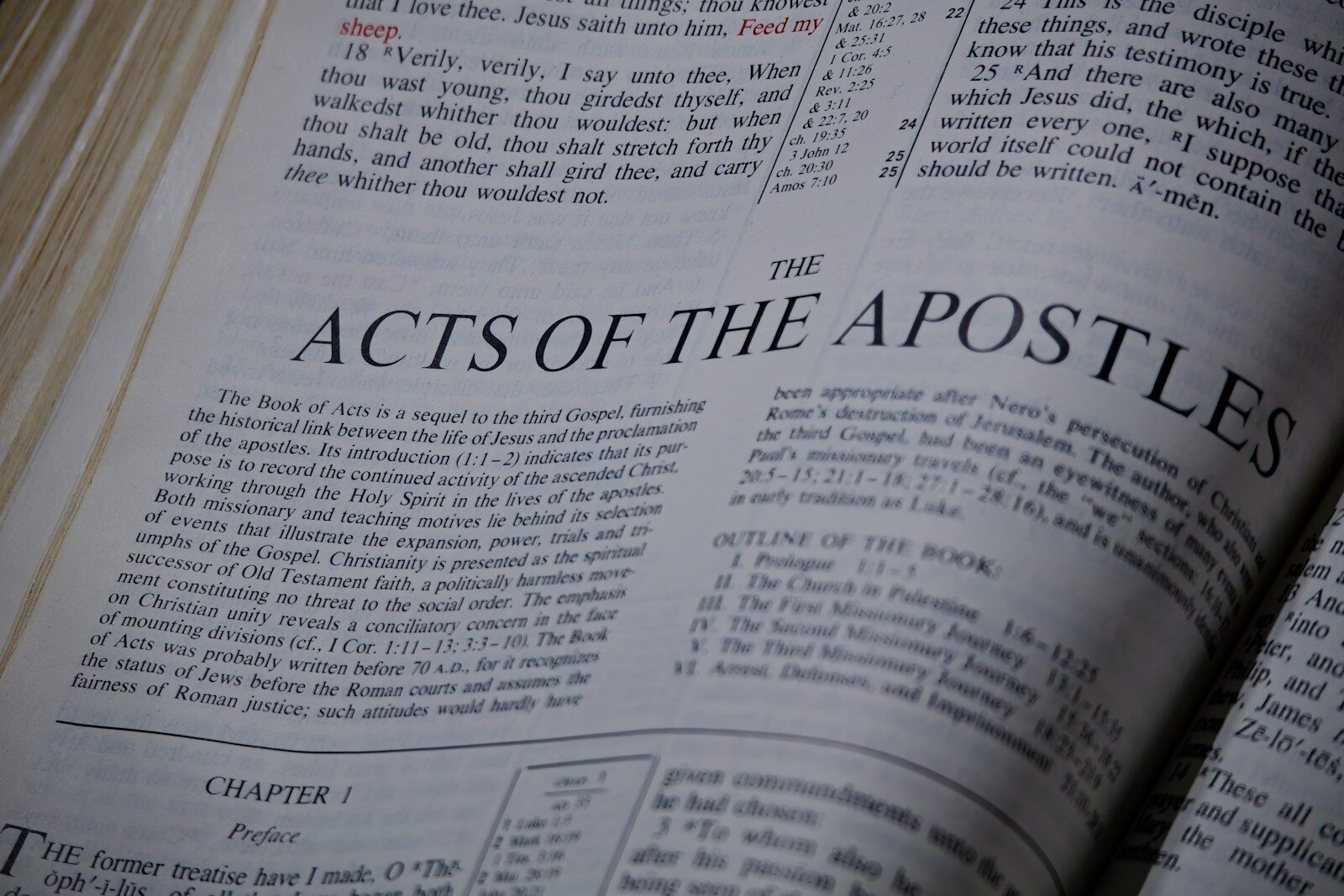
Verse: Acts 28:30-31 NASB
30 Now Paul stayed two full years in his own rented lodging and welcomed all who came to him, 31 preaching the kingdom of God and teaching things about the Lord Jesus Christ with all openness, unhindered.
Summary/ TL;DR
Modern critical scholars date the Book of Acts to 80 – 85 AD, however internal evidence suggests an earlier publication to around 62 AD. The argument stems from the “silent events” that occurred between 62 and 70 AD, including the martyrdoms of James, Peter, and Paul, Nero’s brutal persecution of Christians, and the destruction of the Second Temple. The absence of these massive milestones and how Acts concludes suggests the Apostle Paul was still alive and under house arrest in Rome.
Introduction
“04. Dating the Gospels: First Century” blog post’s focus was observing the modern consensus of dating the gospels. This post examines the book of Acts, the sequel to Luke, for an earlier date. First, let’s establish a summary of the book of Acts. The book is an early church history, beginning with the resurrection of Jesus, around 30 – 33 AD, and ending with Paul under house arrest, 60 – 62 AD. What occurs between these pillars are details of the spread and persecution of the church, specifically focused on the ministries of Peter and Paul. The argument here is what isn’t found beyond these years, to its proposed publication date.
Body
This investigation uses the “silence argument” revolving around the silence of events that occur between the book of Acts conclusion, to the proposed publication date. To establish the lower and upper dating range, we take the conclusion of Acts dating to 62 AD, and modern scholars publication date to 80-85 AD. Then, looking back into history during this dating range, we investigate events that relate to the early church movement. Within this gap, the following occur:
- Martyrdoms (62 – 64 AD):
- Peter,
- Paul,
- James the Just
- Nero’s Persecution of Christians (64 AD),
- Great Jewish Revolt (66 AD),
- Destruction of the Second Temple/ Jerusalem (70 AD)
These are all significant in early church history, because not only are prominent church figures martyred, but the sheer scale of these tragedies would have shaken the movement. Remarkably however, even with the persecution and losses endured, the church continued to spread and flourish.
Lastly, it’s important to cite the ending of Acts, listed below:
TITLE: Acts (of the Apostles)
AUTHOR: Luke
Chapter 28, Verses 30-31
“30 Now Paul stayed two full years in his own rented lodging and welcomed all who came to him, 31 preaching the kingdom of God and teaching things about the Lord Jesus Christ with all openness, unhindered.”
Notice how Luke concludes his history, with Paul under house arrest, preaching openly and unhindered. Keep this in mind as we review the silent points in history. Beginning the examination:
Martyrdoms
Acts References:
Martyrdom
- Stephen, Acts 7:58-60 – 8:1
- Christians, Acts 9:1
- James, brother of John, 44 AD, Acts 12:2
Conspiracy to Murder
- Apostles, Acts 5:33
- Paul, Acts 9:23 – 24, 9:29, 20:3, 23:12, 25:3
Attempted Murder
- Paul, Acts 14:19, 21:30-32, 21:35
Throughout the book of Acts, Luke consistently discusses persecution and violence. In fact, martyrdom and even attempted murder conspiracies against the apostles, primarily Paul, is a recurring theme throughout. So with the mentioned martyrdoms, and violence showcased, we’d expect to read about the following church leaders recorded deaths:
Martyrdom of James the Just
62 AD
Historical Reference:
TITLE: Antiquities of the Jews, ~ 93 AD
AUTHOR: Flavius Josephus (37 – 100 AD)
Jewish Historian
Book 20, Chapter 9, Paragraph 1
“… Festus was now dead; and Albinus was but upon the road. So he assembled the sanhedrim of judges, and brought before them the brother of Jesus who was called Christ, whose name was James: and some others; [or, some of his companions.] And when he had formed an accusation against them as breakers of the law, he delivered them to be stoned.”
- Porcius Festus died in 62 AD
Acts References:
- Indirect, Introduced as a Convert, Acts 1:14
- Direct, Leadership Revealed, Acts 12:17
- Direct, Final Judgement, Acts 15:13-21
- Direct, Mentioned with Elders, Acts 21:17-18
Summary: With only 4 distinct mentions, Luke showcases the authority and leadership of James the Just had within the early church. Using only three direct mentions, James seems to be implied as the head church leader. Then, outside of Christian sources, James the Just is martyred for his belief within Jerusalem by the Jewish leaders according to Josephus in 62 AD. This emphasises the significance of his status to those outside the church. This news would have reached Luke within a year, so it begs the question, why wouldn’t Luke include his death within a proposed ~20 year publication date?
Martyrdom of Peter and Paul
~ 64 AD
Historical References:
TITLE: 1 Clement, 95 – 96 AD
AUTHOR: Clement of Rome (35? – 99 AD)
Early Church Father
Chapter 5, verses 4-7
“Peter, through unjust envy, endured not one or two but many labours, and at last, having delivered his testimony, departed unto the place of glory due to him. Through envy Paul, too, showed by example the prize that is given to patience: seven times was he cast into chains; he was banished; he was stoned; having become a herald, both in the East and in the West, he obtained the noble renown due to his faith; and having preached righteousness to the whole world, and having come to the extremity of the West, and having borne witness before rulers, he departed at length out of the world, and went to the holy place, having become the greatest example of patience.”
TITLE: Church History, 324 AD
AUTHOR: Eusebius (~260 – 339 AD)
Early Church Father
Book II, Chapter 25
“It is, therefore, recorded that Paul was beheaded in Rome itself, and that Peter likewise was crucified under Nero. This account of Peter and Paul is substantiated by the fact that their names are preserved in the cemeteries of that place even to the present day.
“It is confirmed likewise by Caius, a member of the Church, who arose under Zephyrinus, bishop of Rome. He, in a published disputation with Proclus, the leader of the Phrygian heresy, speaks as follows concerning the places where the sacred corpses of the aforesaid apostles are laid: “But I can show the trophies of the apostles. For if you will go to the Vatican or to the Ostian way, you will find the trophies of those who laid the foundations of this church.“”
Acts References: Peter and Paul Mentioned
| Chapter | Peter | Paul | Chapter | Peter | Paul |
| Ch.01 | 2 | Ch.15 | 1 | 9 | |
| Ch.02 | 3 | Ch.16 | 12 | ||
| Ch.03 | 6 | Ch.17 | 9 | ||
| Ch.04 | 4 | Ch.18 | 9 | ||
| Ch.05 | 5 | Ch.19 | 10 | ||
| Ch.06 | Ch.20 | 8 | |||
| Ch.07 | 1 | Ch.21 | 13 | ||
| Ch.08 | 2 | 2 | Ch.22 | 5 | |
| Ch.09 | 7 | 8 | Ch.23 | 17 | |
| Ch.10 | 16 | Ch.24 | 7 | ||
| Ch.11 | 4 | 2 | Ch.25 | 12 | |
| Ch.12 | 10 | 1 | Ch.26 | 7 | |
| Ch.13 | 9 | Ch.27 | 9 | ||
| Ch.14 | 6 | Ch.28 | 10 | ||
| Totals | 59 | 29 | 1 | 137 |
Summary: Peter and Paul served as the central figures of the book of Acts, with the first half focusing on the ministry of Peter, and the latter Paul’s. Using the chart I compiled, Peter’s name is recorded 60 times, whereas Paul’s 166. For comparison, the third most common apostle of the twelve is John the Apostle, which is 9 times. This history is their story, with Luke writing from a contemporary point of view alongside Paul beginning in Acts 16:10. The point is, if martyrdom is mentioned for previous church leaders, and the book of Acts focuses primarily on Peter and Paul, then why did Luke not conclude their story?
Nero’s Persecution of Christians
64 AD
Historical Reference:
TITLE: The Annals
AUTHOR: Tacitus (56 – 120 AD)
Roman Historian/ Politician
Book 15, Chapter 44
“… Therefore, to scotch the rumour, Nero substituted as culprits, and punished with the utmost refinements of cruelty, a class of men, loathed for their vices, whom the crowd styled Christians. Christus, the founder of the name, had undergone the death penalty in the reign of Tiberius, by sentence of the procurator Pontius Pilatus, and the pernicious superstition was checked for a moment, only to break out once more, not merely in Judaea, the home of the disease, but in the capital itself, where all things horrible or shameful in the world collect and find a vogue. First, then, the confessed members of the sect were arrested; next, on their disclosures, vast numbers were convicted, not so much on the count of arson as for hatred of the human race. And derision accompanied their end: they were covered with wild beasts’ skins and torn to death by dogs; or they were fastened on crosses, and, when daylight failed were burned to serve as lamps by night. Nero had offered his Gardens for the spectacle, and gave an exhibition in his Circus, mixing with the crowd in the habit of a charioteer, or mounted on his car.”
- Context: Nero substitutes Christians for blame of the The Great Fire of Rome, 64 AD
2 Defenses:
- Pattern of Persecutions
- Peter/ Paul
1. Pattern of Persecutions
Acts References:
General
- Christians, Acts 8:1-2
- Stephen’s Disciples, Acts 11:19
- Paul and Barnabas, Acts 13:50
- Jason and Others, Acts 17:6
- Paul and Silas, Acts 17:13
- Paul, Acts 18:12
- Paul’s Companions, Acts 19:21-41
Imprisonment
- Peter and John, Acts 4:1-3
- Apostles, Acts 5:17-19
- Christians, Acts 8:3
- Conspire to Imprison, Acts 9:2
- Peter, Acts 12:3
- Paul and Silas, Acts 16:23
- Paul, Acts 21:33, 28:16
Trial
- Paul, Acts 24:10, 25:8, 25:23
Conspiracy to Attempt Violence
- Paul and Barnabas, Acts 14:5
Physical Violence
- Apostles, Acts 5:40
- Christians, Acts 9:13, 12:1
- Paul and Silas, Acts 16:19-22
- Paul, Acts 21:27, Acts 23:2
Summary: With the listed examples provided, they are not strictly Roman, however the demonstration Luke indicates persecution of the church is a common theme. Persecution, a broad term, actually expands larger than this list, for example, a few found in the martyrdom argument, however this list focuses on a more “general” list. So Luke consistently makes note of the unjust treatment, but using a later publication date, ignores this behemoth of persecution the church endured.
2. Peter/ Paul
As Peter and Paul were already focused on in the martyrdom section, this will be brief, as not to excessively repeat previous talking points. However, an additional significance to Nero’s persecution against Christians, is early church history places Peter and Paul’s martyrdom to this event by Eusebius(quote found in the Martyrdom section). Nero’s orders not only ruthlessly persecuted Christians, but murdered the protagonists of Acts.
The Great Jewish Revolt
66 ad
Historical Reference:
TITLE: Antiquities of the Jews, ~ 93 AD
AUTHOR: Flavius Josephus (37 – 100 AD)
Jewish Historian
Book 20, Chapter 11, Paragraph 1
“1. [A.D. 64.] Now Gessius Florus, who was sent as successor to Albinus, by Nero, filled Judea with abundance of miseries…And what need I say any more upon this head? since it was this Florus who necessitated us to take up arms against the Romans; while we thought it better to be destroyed at once, than by little and little. Now this war began in the second year of the government of Florus; and the twelfth year of the reign of Nero. But then what actions we were forced to do; or what miseries we were enabled to suffer, may be accurately known by such as will peruse those books which I have written about the Jewish war.”
- Nero became emperor in 54 AD
Summary: An escalating conflict between the Jews and Romans had now erupted by this point in history. Christianity, throughout its history, has always shared history, and scripture with Judaism. This was a massive uprising against Roman authorities, and with war declared, should have sent shockwaves throughout the empire. However, as seen, Luke does not include this event in his works. Therefore, it was highly unsafe and risky to practice or announce both Judaism and Christianity, and unusual for Luke to omit it.
Destruction of the Second Temple/ Jerusalem
70 aD
TITLE: The Jewish Wars, ~75 AD
AUTHOR: Flavius Josephus (37 – 100 AD)
Jewish Historian
Book 6, Chapter 4, Paragraph 5
“… At which time one of the soldiers, without staying for any orders, and without any concern or dread upon him at so great an undertaking; and being hurried on by a certain divine fury, snatched somewhat out of the materials that were on fire: and being lifted up by another soldier, he set fire to a golden window, through which there was a passage to the rooms that were round about the holy house, on the north side of it. As the flames went upward, the Jews made a great clamour, such as so mighty an affliction required; and ran together to prevent it. And now they spared not their lives any longer, nor suffered any thing to restrain their force, since that holy house was perishing, for whose sake it was that they kept such a guard about it.”
Book 7, Chapter 1, Paragraph 1
“Cæsar gave orders that they should now demolish the intire city, and temple… But for all the rest of the wall, it was so thoroughly laid even with the ground, by those that dug it up to the foundation, that there was left nothing to make those that came thither believe it had ever been inhabited. This was the end which Jerusalem came to, by the madness of those that were for innovations. A city otherwise of great magnificence, and of mighty fame among all mankind”
Summary: The Second Temple was absolutely monumental to Judaism, as a symbolic gesture as the earthly house to God himself. As Jesus and his disciples were Jews themselves, the Holy House held significant value to early Christians. This would have been a catastrophic loss, with no mention throughout the book of Acts. Acts would have been a perfect candidate to mention the destruction of the temple, as a way of acknowledging a fulfillment of prophecy found in the synoptics. Without neglecting Jerusalem, the city too was destroyed, in such a manner that left those wondering if any one had once lived within. The home of Judaism and the temple of God destroyed, without a mere mention.
Disputing Counter-Arguments
- Luke feared being persecuted, intentionally dismissing these events for his protection.
- If Luke had written in ~80 AD and kept quiet out of fear, this theory in itself is problematic. For instance, Nero had committed suicide by 68 AD, was despised by Rome, condemned by the Roman Senate and historians like Tacitus and Suetonius openly criticised Nero’s cruelty. Luke was a victim of persecution alongside Paul, he too was accustomed to unjust treatment. Even outside Roman jurisdiction, this silence wouldn’t explain dismissing James the Just martyrdom, as that involved the Jewish authorities.
- Scholars theorize Luke’s intention or theology was to conclude when Paul’s mission reached Rome.
- Luke wrote his history in a very cyclical pattern, which always resulted in persecution against a movement. If Luke had mentioned the “silenced” events, they would have certainly fit his pattern of:
- Apostle leaves for a destination ‘A’,
- Apostle arrives and preaches,
- Opposition is formed against,
- Apostle leaves for destination ‘B’
- Luke’s ending doesn’t answer the question, was Paul’s mission successful? How does the mission handle the peak of persecution with Nero seeking to destroy the religion and ultimately failing. If Luke wanted to demonstrate the unstoppable movement of Christianity, why would he not include the perseverance of the early church while persecution is at its climax?
- This theory leans on literary mind-reading of Luke, essentially scholars must come up with a reason to justify their late dating. Unless we have written documentation of Luke stating what scholars are theorizing, then that’s all it is, a proposed theory.
- If this theory was correct, why would Luke not include Peter and Paul uniting once more in Rome, with tradition placing them in Rome by the early/ middle 60’s? As previously mentioned, the book focuses on both ministries, a reunion of 2 unstoppable forces establishing the church within Rome would have fit within this theory.
- Luke wrote his history in a very cyclical pattern, which always resulted in persecution against a movement. If Luke had mentioned the “silenced” events, they would have certainly fit his pattern of:
- The proposed “Third Volume” was designed to include these events.
- In the proposed publication date to 80-85 AD, which would have resulted in approximately 20 years passing from the ending of Acts, Luke would have had time to publish a third volume. However nowhere is a third volume even mentioned throughout history, hinted at by Luke himself, or even discovered.
Conclusion
To wrap this all together, here is one final review of the finale of Acts:
TITLE: Acts (of the Apostles)
AUTHOR: Luke
Chapter 28, Verses 30-31
“30 Now Paul stayed two full years in his own rented lodging and welcomed all who came to him, 31 preaching the kingdom of God and teaching things about the Lord Jesus Christ with all openness, unhindered.”
Luke writes Paul is under house arrest (60 – 62 AD), preaching openly and unbothered. The listed “silent” events:
- Martyrdoms (62 – 64 AD):
- Peter,
- Paul,
- James the Just
- Nero’s Persecution of Christians (64 AD),
- Great Jewish Revolt (66 AD),
- Destruction of the Second Temple/ Jerusalem (70 AD)
Don’t fit within this criteria, as if Luke had written after 80 AD, we see the Christian movement was definitely hindered, and openly persecuted against. There are major omitted martyrdoms, large scale persecution, emerging wars, and massive losses within the geographical surroundings. Finally as the book focuses on both Peter and Paul, we aren’t treated with their reunion in Rome to establish the very roots that spread the church in Rome. Just as with occam’s razor, maybe the simplest explanation of the dating of Acts, is that it was published while Paul was still alive.
Leave a Reply