Verse: John 18: 38
38 Pilate said to Him, “What is truth?” And when he had said this, he went out again to the Jews and said to them, “I find no guilt in Him.”…
Summary/ TL;DR
Luke’s portrayal of Rome being protective and neutral of Christianity throughout Acts appears as a contradiction to the objectively brutal history of Nero’s persecution. This portrait Luke is painting therefore seems to imply an earlier dating before 64 AD.
Introduction
“05. Dating the Gospels: Acts Part I – Silence” focused on the “Silence Argument”, which focused on events that occurred between the ending of the books of Acts, to its proposed publication date which are not referenced within the text. Part 2 is an investigation into the Roman narrative/ literacy direction that Luke wrote in. By using this method of analysis, we can take context into consideration regarding Luke’s narrative direction and tone. We’ll be focusing on all references of Romans within Acts, falling under 5 categories:
- Roman Figures Open Profession of Belief
- Officials Find No Wrongdoing Found
- Protection and Leniency
- Judaism = Christianity
- Paul’s House Arrest
Body
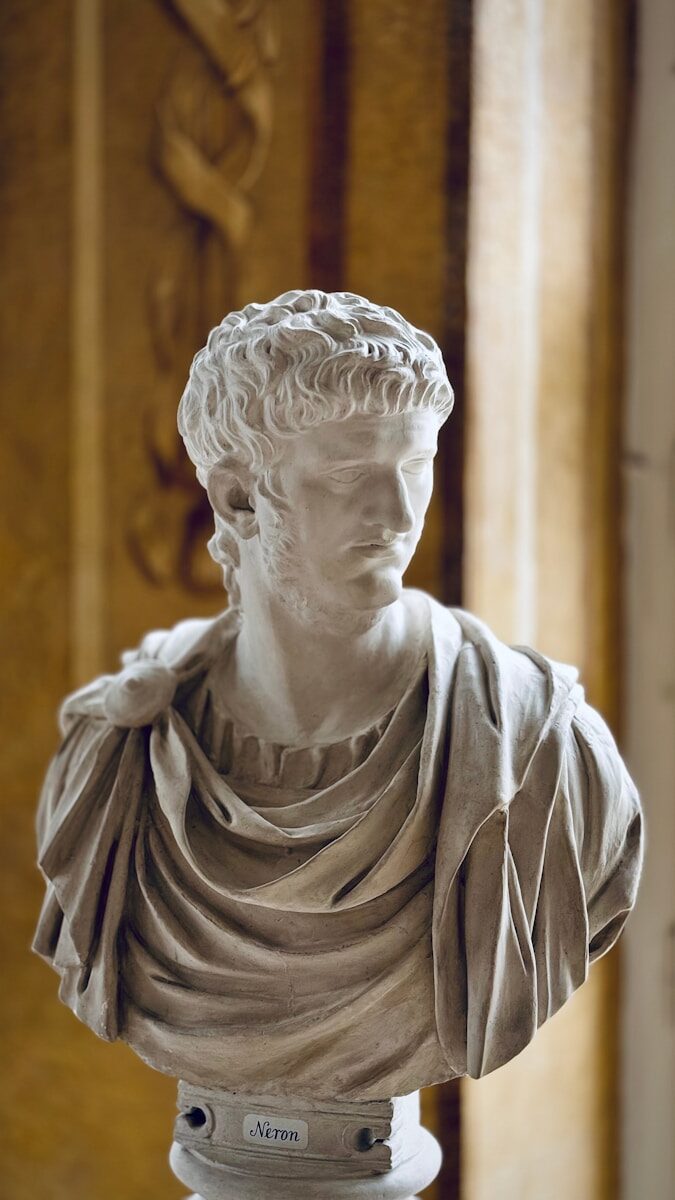
What does history teach us? We know in 64 AD, Nero unleashed an unjust wave of persecution against Christianity lasting well into the fourth century. Therefore, if we are using the critical dating of an Acts publication date of 80-85 AD, Luke and the Christian community were in real time experiencing this opposition. So to those Christians, Rome was viewed equivalently with death and violence. For a recap, Roman historian Tacitus recorded Nero’s persecution against the Christians:
Persecution of Christians by Nero
64 AD
Historical Reference:
TITLE: The Annals,
AUTHOR: Tacitus (56 – 120 AD)
Roman Historian/ Politician
Book 15, Chapter 44
“… Therefore, to scotch the rumour, Nero substituted as culprits, and punished with the utmost refinements of cruelty, a class of men, loathed for their vices, whom the crowd styled Christians. Christus, the founder of the name, had undergone the death penalty in the reign of Tiberius, by sentence of the procurator Pontius Pilatus, and the pernicious superstition was checked for a moment, only to break out once more, not merely in Judaea, the home of the disease, but in the capital itself, where all things horrible or shameful in the world collect and find a vogue. First, then, the confessed members of the sect were arrested; next, on their disclosures, vast numbers were convicted, not so much on the count of arson as for hatred of the human race. And derision accompanied their end: they were covered with wild beasts’ skins and torn to death by dogs; or they were fastened on crosses, and, when daylight failed were burned to serve as lamps by night. Nero had offered his Gardens for the spectacle, and gave an exhibition in his Circus, mixing with the crowd in the habit of a charioteer, or mounted on his car.”
So with this history established, how does Luke portray the Roman authority to his audience?
Roman Figures Open Profession of Belief
- Cornelius, Acts 10: 1-32
- Title: Centurion, commander of 80-100 soldiers
- Sergius Paulus, Acts 13:6-12
- Title: Proconsul, an official of a Roman territory
- Jailer of Philippi, Acts 16:31-34
Summary: In this section, we see Roman’s with positions of power openly professing their faith to their households and neighbours. This narrative recorded by Luke seems to presuppose that these open declarations were able to do so safely, without any wrongdoing. Granted, these open declarations of faith were pre-Neronian persecution, it’s an interesting narrative choice for Luke to include names, locations and titles of Roman citizens when, by the supposed critical dating of 80-85 AD, would have been handing Roman officials a list of culprits to persecute. Not to mention, Roman officials with high ranking positions of power, not only would Luke be painting a bullseye onto these figures and their families, but also the Christian community, likely converting them from friend to foe.
Officials Find No Wrongdoing Found
- The Magistrates of Philippi, Acts 16:22-40
- Title: Magistrates, civil officials
- Gallio, Proconsul of Achaia, Acts 18:12–17
- The Town Clerk of Ephesus, Acts 19:35–41
- Claudius Lysias, Acts 21–23
- Title: Tribune, elected official/ military commander
- King Agrippa, Governors Felix and Festus, Acts 24-26
- Paul, Acts 28:18
- Reflection of Events
Protection and Leniency
- Paul Seized in the Temple, Acts 21:31–36
- Paul Before the Council, Acts 23:10
- Paul Moved to Caesarea, Acts 23:23–33
- Julius, the Centurion, Acts 27–28
- Paul’s House Arrest, Acts 28:16
Summary: Across these events, Roman officials repeatedly declared no wrongdoings were being committed by Christians, while also shielding them from harm. If we’re accepting a later publication date, it’s possible Luke is telling an honest historical account demonstrating to current Roman officials that even by their own standards, Christianity wasn’t committing any crimes. However, we know Luke’s intent is to write an orderly account to the “most excellent Theophilus” found in Luke 1, distributed to the Christian churches. So to continually showcase that Romans found no issue with the Christian community, while by the critical dating Christians were being executed for their faith alone, paints a perspective that modern Christians wouldn’t even be able to fathom.
Judaism = Christianity
- Proconsul Gallio, Acts 18:12-16
- Claudius Lysias, to Governor Felix , Acts 23:26-29
- Festus to King Agrippa, Acts 25:14-20
Summary: These references in Acts are used to showcase that during Acts’ narrative, Rome viewed Christianity as equal to or a sect of Judaism. To recap, Acts history concludes in 61-62 AD, but by 64 AD we know Rome had found a distinction between the two Abrahamic religions. So a question must be asked, “What did these narratives serve?”. This was a concern in the early movement, but if we are utilizing a later dating, this was no longer debated or discussed. Because no matter the angle, Rome by a later date, saw both religions as plagues to their empire, dealing with them with differing counts of violence.
Paul’s House Arrest
- Acts 28: 16 + 30
Summary: Firstly, to quote directly from Acts itself, Luke wrote that Paul was “… teaching things about the Lord Jesus Christ with all openness, unhindered.”. If Luke was writing during Rome’s open persecution against Christians, Luke’s audience would be dumbfounded by this detail. The very thing Luke wrote about what Paul was doing, by the time the Neronian persecution began, would have resulted in the highest degree of punishment. Not to mention, by mentioning “teaching things about the Lord Jesus Christ with all openness, unhindered” could come across as a set of instructions for Luke’s readers, serving as a death sentence. Secondly, with tradition placing Paul’s death to Nero, and without resulting back into the silence argument, this should have resulted in at least a bitter tone, as Paul’s ministry served as the second half of the book.
Conclusion
Using the listed examples, Roman authorities have a consistent pattern of rescuing a church leader from harm, misunderstanding Christians, or willing to release them for not breaking any Roman law. In other words, Luke writes in a way that Romans are neutral or even protective of Christians. Therefore, if Luke was aware of Nero’s persecution and treatment of Christians, you’d expect a harsher tone or direct references of Roman persecution. Instead, the objectively brutal history doesn’t match the portrait that Luke is painting. One question must be asked, why would Luke use these as examples to present to his audience? There’s a limit to what you can include in a novel, and if correct, all Roman references within Acts never showcase any unjust persecution from the Roman empire. To conclude, with the previous post Silence Arguments, and Roman tone, Acts in my opinion steers in the direction of a pre-62 AD date.
Leave a Reply